

Common Challenges with Data Center Valves and How to Overcome Them
- 2026-03-30 08:55:02
- admin
- NO COMMENTS
Introduction to Data Center Valves
During a peak summer afternoon in a large data center’s server room, an engineer notices the chilled water loop struggling to keep temperatures in check. As rows of servers hum and exhaust hot air, valves quietly do their work behind the scenes—directing coolant flow, isolating equipment, and safeguarding the system. In this scenario, a slight hiccup becomes evident: when an automated valve actuates, a pressure fluctuation ripples through the cooling lines. The engineer observes a brief hesitation in flow, followed by a minor pressure drop and then a recovery. Such small disturbances hint at bigger underlying issues like valve wear or improper sizing. In the densely packed environment of a data center, every valve plays a critical role in maintaining the delicate thermal balance. A single valve that sticks or leaks can send temperatures climbing within minutes, threatening uptime and equipment lifespan. Data center engineers, therefore, treat valves not as simple plumbing components, but as mission-critical assets that must perform reliably 24/7.
The Importance of Valves in Cooling Systems
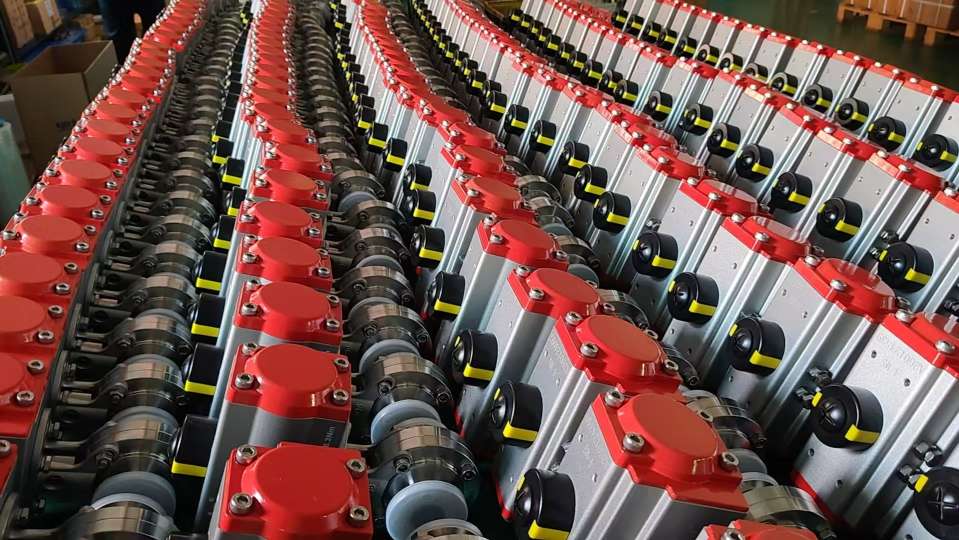
Valves are the unsung heroes of data center cooling systems. They regulate chilled water or liquid coolant flowing through server racks, heat exchangers, and CRAH/CRAC units (computer room air handling/air conditioning units). In modern high-density data centers, liquid cooling is increasingly common, whether via rear-door heat exchangers or direct-to-chip cold plates. In these closed-loop systems, valves serve several vital functions: controlling flow direction, isolating sections for maintenance, switching between redundant loops, and executing emergency shut-off sequences. For example, when an operator needs to service one cooling loop, isolation valves must close tightly to reroute flow to a backup loop without leakage. Similarly, check valves at pump outlets prevent reverse flow when a pump is off, ensuring the redundancy works as intended. Each valve’s performance directly impacts the cooling efficiency and safety of the facility.
Furthermore, data centers typically run continuous operations with no tolerance for downtime. Valves must handle this steady duty under stable but critical conditions: chilled water at moderate pressures (often 100–300 PSI) must be delivered consistently. Over time, even normal operation can lead to wear if the valve’s materials and design are not up to the task. Corrosion, for instance, is a concern in water/glycol mixtures commonly used as coolant. This is why many data center valves are made of 316L stainless steel, a material renowned for its corrosion resistance in such fluids. A 316L stainless valve body and disc can resist the glycol-water blend or even modern dielectric coolants without pitting or leaching, ensuring long-term reliability. In short, well-chosen valves keep the cooling system efficient and safe: maintaining optimal temperatures, preventing leaks, and allowing technicians to control the thermal environment with precision.
Key Types of Valves in Data Centers
Overview of Data Center Ball Valves
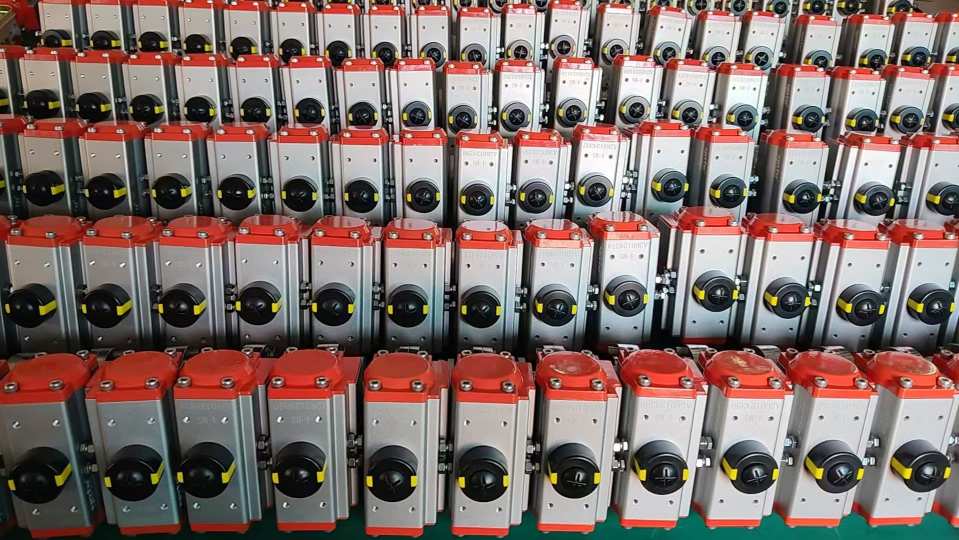
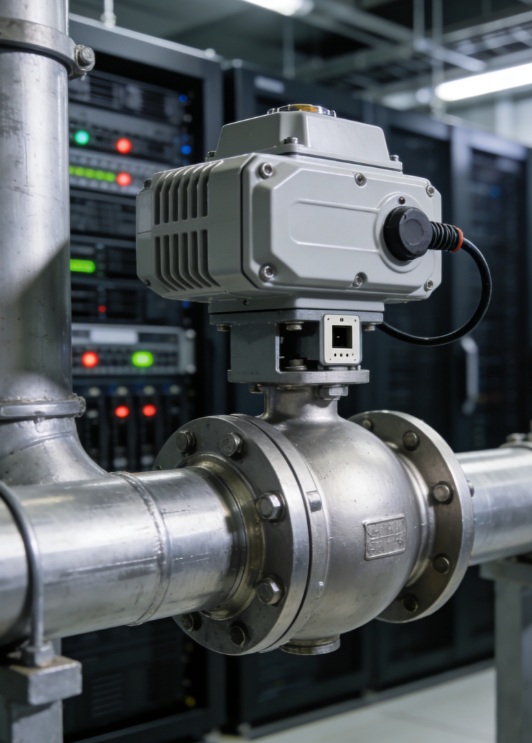
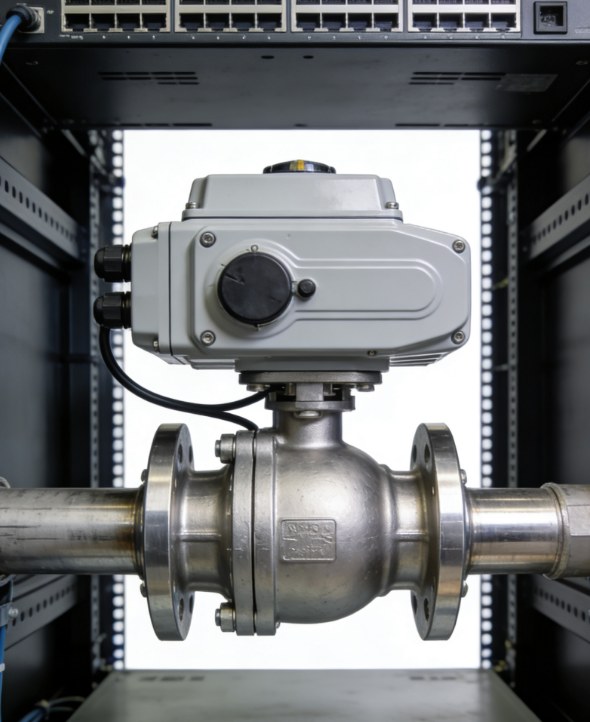
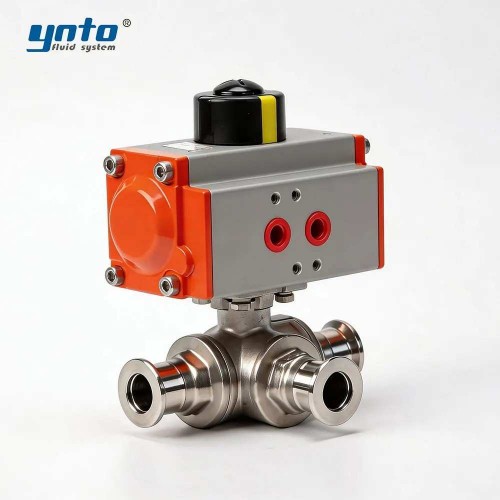
Ball valves are a common sight in data centers, valued for their tight shutoff capabilities and straightforward design. These valves use a spherical obturator with a hole through it; when aligned with the flow, coolant passes freely, and when turned 90°, flow stops almost completely. Ball valves are often installed as isolation points in chilled water loops and backup piping. For example, an electric ball valve is frequently used at the inlet of a server rack coolant distribution unit to allow remote on/off control of coolant feed. Engineers appreciate that a high-quality ball valve provides zero leakage when closed, which is crucial when segments of the cooling system need to be shut off without any drips. In emergency or maintenance situations, closing a ball valve isolates sections instantly, protecting critical equipment.
In fuel supply lines for backup generators (another fluid system within many data centers), ball valves are also favored because of this bubble-tight shutoff. They are available in manual or actuated forms; data centers often use electric actuator valve assemblies (electric motor-operated ball valves) to integrate with building management systems. By choosing an electric ball valve with the correct specifications, engineers can achieve fast and reliable shutoff via remote signals. Material selection for ball valves in data centers typically includes stainless steel bodies (304 or 316L grades) to prevent any rust or chemical reaction with the coolant. Seats are usually PTFE (Teflon) or similar polymers for durability and chemical inertness. For instance, a two-way ball valve with a 316L body and PTFE seats offers excellent corrosion resistance and can handle repeated cycling without significant wear. In summary, ball valves in data centers serve as dependable gatekeepers—when closed, they isolate; when open, they allow full, unobstructed flow with minimal pressure drop.
Check Valves for Data Center Cooling Systems
Wherever you have pumps and parallel piping paths in a data center cooling system, you’ll find check valves (also known as non-return valves) playing a pivotal safety role. The primary job of a check valve is to permit one-way flow and prevent any reverse flow that could occur when a pump stops or if there’s a pressure differential in connected loops. In a typical chiller plant feeding a data center, multiple pump assemblies push chilled water through the racks. If one pump is off or in standby, a check valve on its discharge line stops water from flowing backwards through that idle pump. This one-way protection is vital in chilled water pumps and also in any liquid cooling loops attached to servers. Without check valves, a sudden pump shutdown could send coolant rushing the wrong way, possibly emptying a critical circuit or damaging equipment.
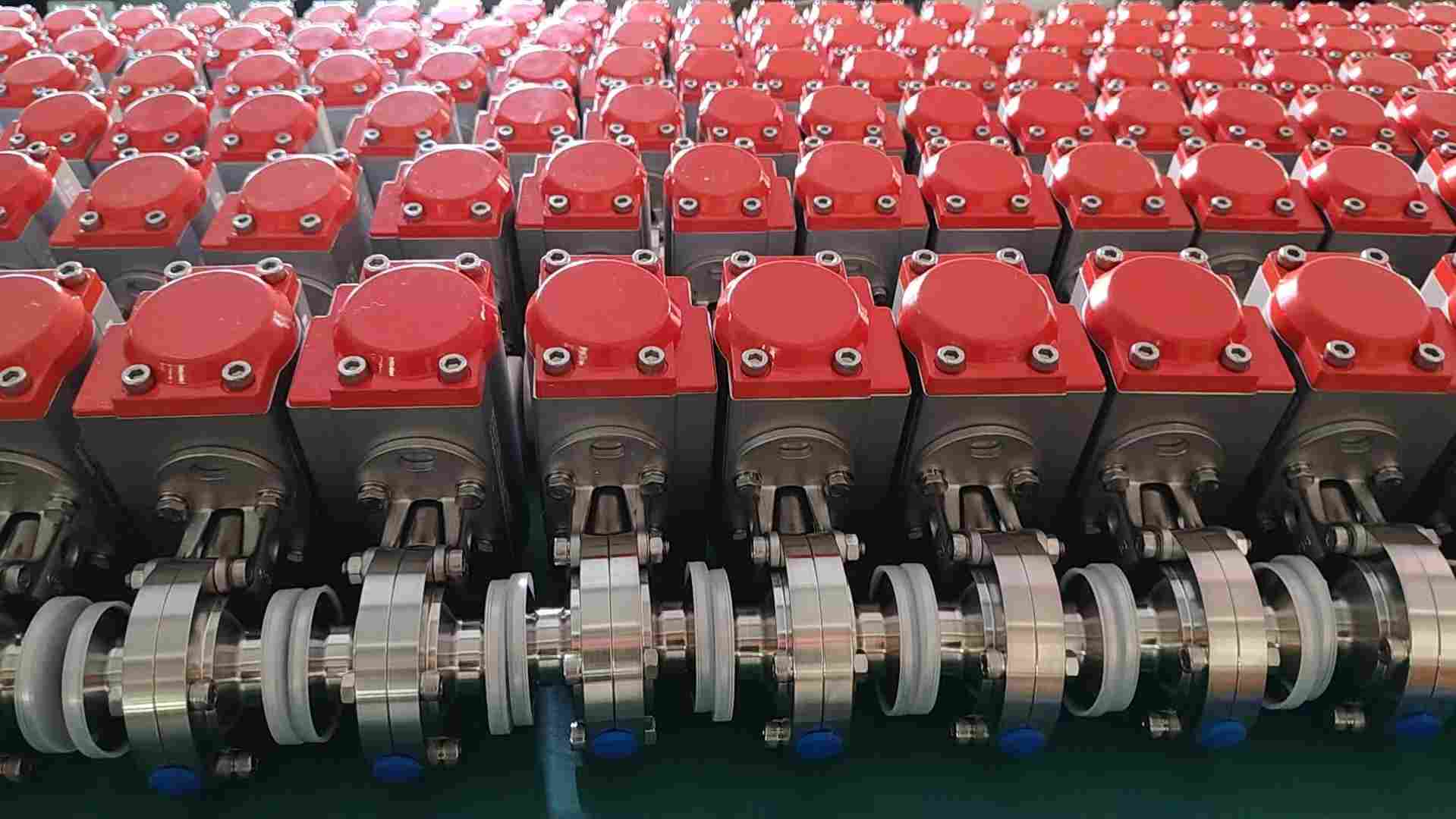
In data centers exploring liquid cooling for servers, such as direct-to-chip cooling modules, check valves become even more crucial during maintenance. Many liquid-cooled server designs use quick-disconnect fittings that include small check valves to prevent coolant spills when servers are serviced. For example, when a server blade is removed, spring-loaded check valves immediately seal off the coolant lines, preventing leaks of dielectric fluid or water in the rack. The design considerations for check valves in these applications include having a low cracking pressure (so they open easily at the slightest forward flow) and minimal head loss (so they don’t introduce significant pressure drop in the system). Typical choices are spring-loaded disk or nozzle check valves made of stainless steel or bronze, with elastomer seats like EPDM (ideal for water/glycol) or FKM (Viton, ideal for higher temperatures or special fluids) to ensure a tight seal. Data center operators should ensure the selected check valves meet relevant standards (for instance, ANSI/AWWA for swing check valves or API 594 for industrial check valves) so that their performance is verified. In essence, check valves act as the system’s backflow guardians – quietly ensuring that coolant and other fluids flow only in the intended direction, thereby protecting pumps and sensitive equipment from reverse pressure damage.
Data Center High Performance Butterfly Valves
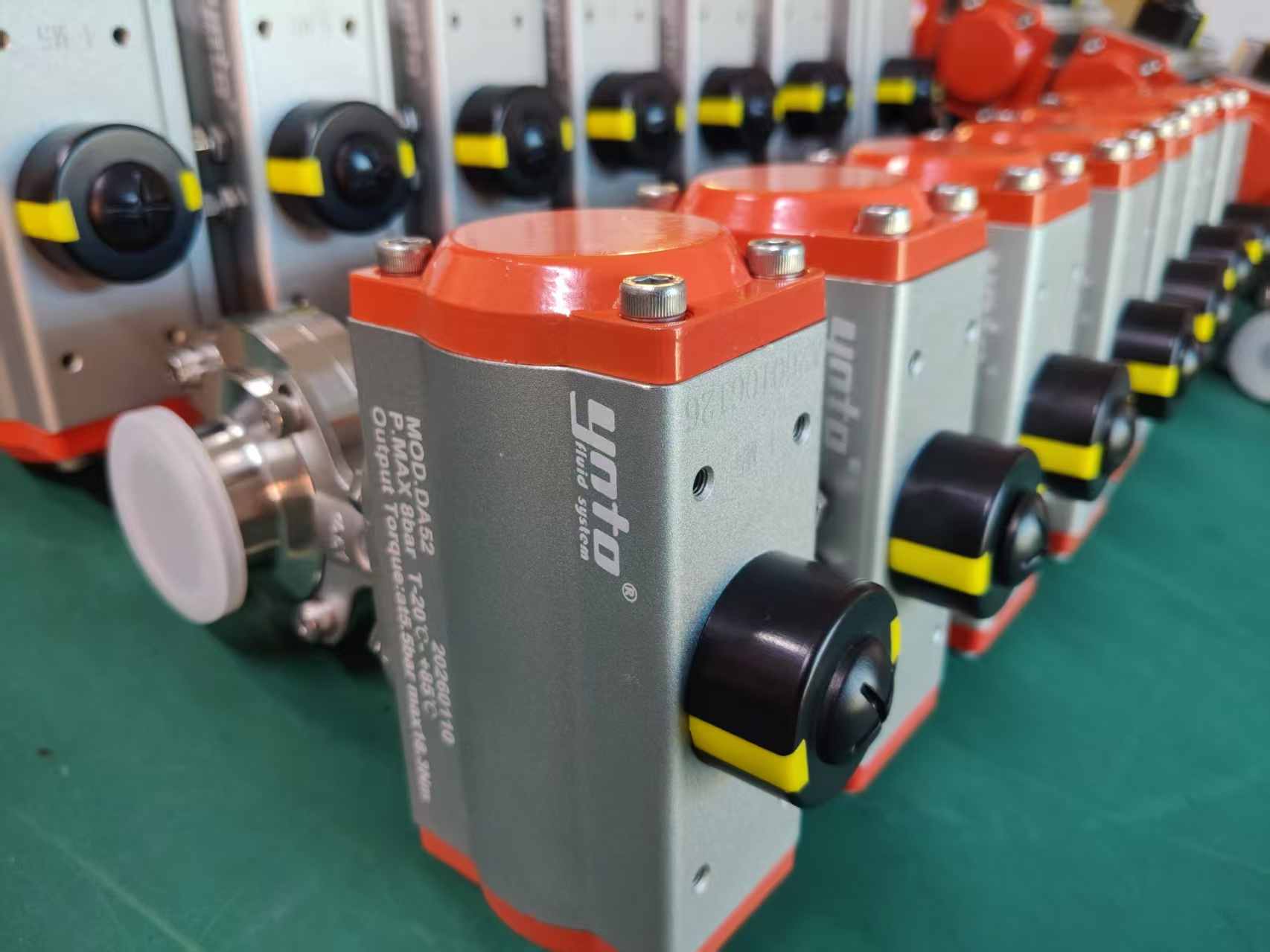
For large-diameter piping in data centers – such as the primary supply and return lines in a central chilled water plant – butterfly valves are often the valve of choice. Their slim, disc-based design is compact, cost-effective, and ideal for big pipe sizes. However, not all butterfly valves are created equal. Data centers increasingly employ high performance butterfly valves, which are typically double-offset (double-eccentric) or even triple-offset in design. These advanced designs offer improved sealing and pressure capabilities compared to basic concentric butterfly valves. In a cooling system, a high performance butterfly valve can shut off against higher pressure (for example, at the pump discharge or upstream of a pressure exchanger) without leaking, and often meets tight shutoff ratings like ANSI Class VI or zero-leakage under test conditions.
Butterfly valves are widely used in chilled water systems for their ability to allow fast shutoff and because they can be easily motorized for remote control via the building automation system (BAS). An electric butterfly valve is commonly found on the main headers of data center cooling distribution. These valves, when paired with robust actuators, can swiftly isolate a branch or building zone if a leak is detected or if maintenance is needed, all at the click of a button from a control room. High performance butterfly valves in this context often feature stainless steel discs and bodies (e.g., 316L) for corrosion resistance, and laminated or coated seals (like RTFE or metal graphite seals in triple-offset types) that can handle a wide temperature range and ensure longevity. In fact, a 316L stainless butterfly valve is well-suited for data centers because its body and disc resist corrosion in glycol-water mixtures and even in dielectric fluids used for some liquid cooling setups.
One key advantage of high performance butterfly valves is their ability to maintain seal integrity under fluctuating flow conditions. Data center cooling demand can vary, causing flow changes and pressure pulsations in the pipes. A high-grade resilient-seated or offset butterfly valve is engineered for stability under these changing conditions, meaning it is less prone to vibration or wear. Additionally, these valves often come with higher close-off pressure ratings and low leakage rates, as noted by HVAC specialists. For example, a double-offset butterfly valve with a properly rated actuator might guarantee no more than, say, 0.1% leakage at 150 psi differential – a level of performance essential for avoiding coolant loss. Many such valves also adhere to standards like API 609 Category B (which covers high performance butterfly valves) and undergo API 598 or ISO 5208 leak testing to verify their sealing capability. In practice, this means that when a data center operator closes a butterfly valve to reroute cooling, they can trust it will hold tight and not bleed cold water into an isolated branch.
Major Challenges with Data Center Valves
Performance Issues with Cooling System Valves
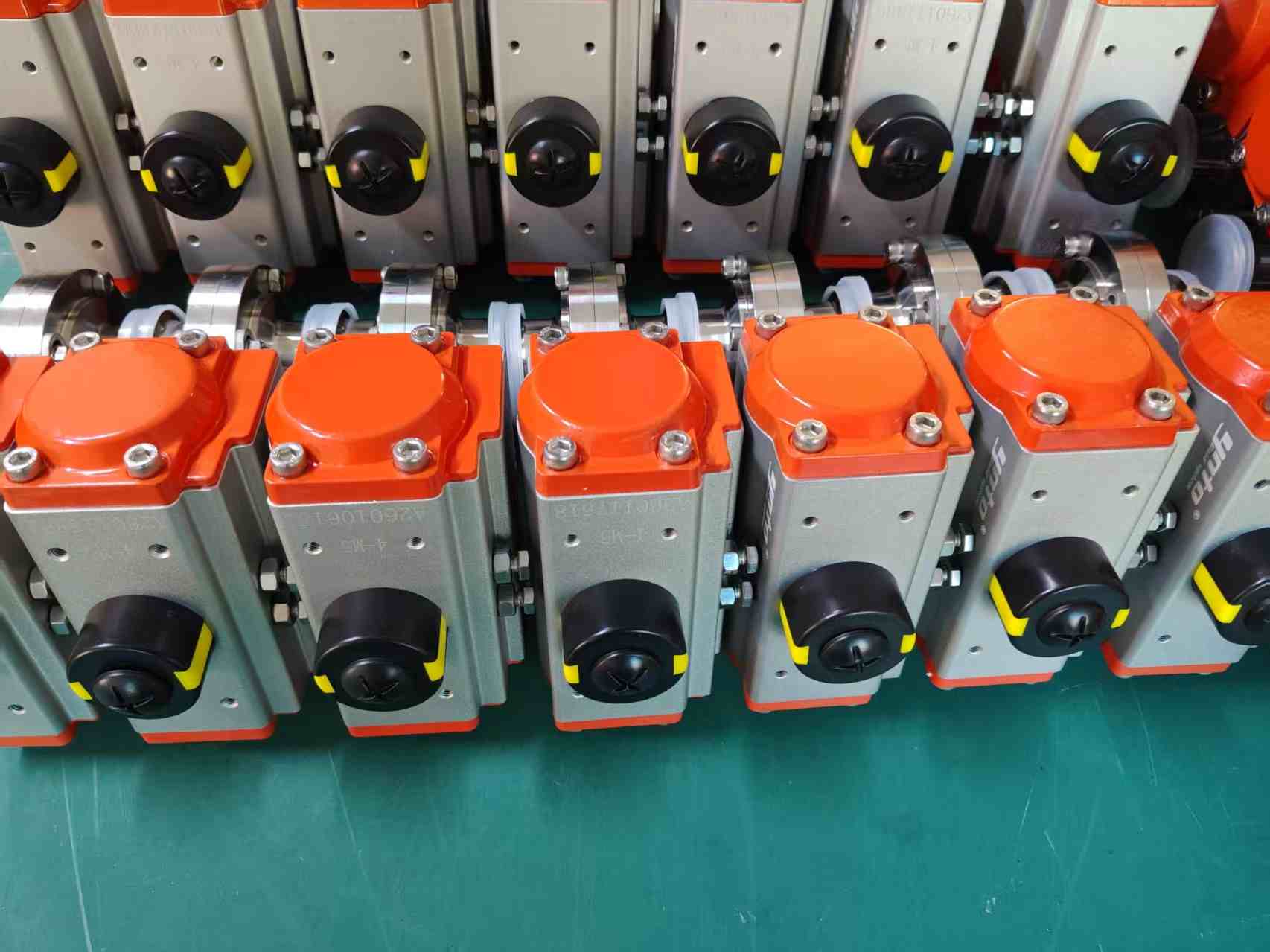
Even with the right valves in place, data center operators often face performance challenges that arise from how those valves interact with the dynamic cooling environment. One common issue is flow control instability at low opening positions. For instance, if a valve is oversized for its application, it may operate mostly near the closed position, where small movements can cause disproportionate changes in flow. Engineers during commissioning might observe a valve “hunting” (oscillating) to maintain a set temperature, leading to pressure oscillations in the coolant line. This is not just a control tuning issue – it can be a valve characteristic problem. A poorly chosen control valve may cavitate or allow micro-vibrations of the trim at certain flow rates, which in turn leads to valve seat wear and eventual loss of tight shutoff. An example cause-effect chain here would be: oversized valve → operates at <20% open → turbulent flow and cavitation → gradual trim erosion → inability to control flow precisely over time.
Another challenge is maintaining even cooling distribution across all servers. If the valves controlling flow to different rack rows are not balanced or if a differential pressure control strategy is absent, some areas may get excess flow while others starve. As Belimo’s cooling experts note, if flow is too low, components can overheat; if flow is too high, it can cause erosion in cold plates, waste energy, and destabilize the system. In data center terms, uneven valve performance can create hot spots (where insufficient coolant flows to a rack) or undue stress on components (where excessive flow velocity erodes piping or cold plate channels). Thus, valves need to be properly sized and often pressure-independent for critical cooling circuits. The adoption of pressure independent control valves (PICVs) in data centers is one response to this challenge – these valves can automatically compensate for pressure fluctuations, delivering stable flow to each server rack even as other valves open or close.
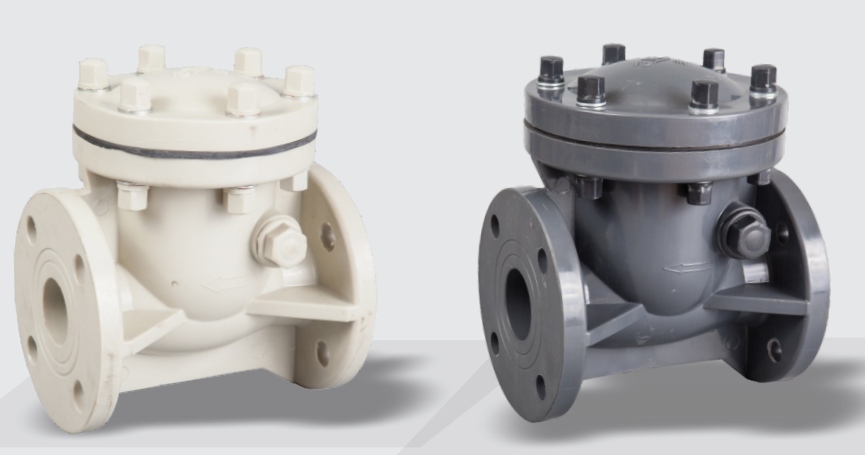
Water hammer and pressure surge issues are another performance concern. If a large valve closes too quickly (for example, an emergency shut-off triggered by a fault), the deceleration of water can create a hammer – a shockwave that travels through pipes. This can strain valve discs, actuators, and pipe supports. Engineers mitigate this by using valves with characterized closures (not slamming shut instantly) or adding surge dampeners. Nonetheless, it’s a challenge that must be managed in valve selection and control strategy.
Finally, the materials inside valves can themselves pose performance problems if not chosen for the environment. In a data center cooling loop, materials must handle continuous exposure to treated water or water-glycol mixtures. Chlorides in water, if present, can attack stainless steel over time (though 316L’s molybdenum content greatly helps resist this). Elastomer seals like EPDM are generally excellent for water service and resist glycol, but if the fluid contains any trace oils or is a hydrocarbon-based dielectric, EPDM would deteriorate – requiring FKM/Viton or PTFE components instead. If a wrong seal material is used, you might see seal swelling or cracking → valve leakage → gradual cooling efficiency loss as a sequence. Therefore, understanding the coolant chemistry and operating temperatures is essential to avoid material-related performance pitfalls.
Risks of Valve Failures in Critical Operations
The consequences of valve failures in a data center can be severe, given how critical cooling and other fluid systems are to uptime and safety. A “valve failure” can take many forms – a valve stuck in position, a leaking seat, a broken actuator, or even a catastrophic body or stem failure. Each carries its own risks:
· Cooling Loop Valve Fails Closed: Consider a control valve feeding a bank of server racks that suddenly sticks closed. Coolant flow stops, and within seconds the servers begin to overheat. Most modern data centers have high temperature alarms, and an unexpected valve closure will trigger emergency responses – perhaps spinning up backup cooling or even shutting down equipment. In the worst case, if the issue isn’t mitigated in time, servers can throttle performance or shutdown to avoid damage, leading to service outages. A single valve failure can interrupt cooling to critical hardware, underscoring why redundancy (N+1 loops, bypass lines) is often built into designs. This scenario illustrates a chain: Valve closure → loss of cooling → rack temperature spike → IT equipment failure risk. To overcome this, critical cooling valves are often configured “fail-open” (or fail to a safe position) with spring-return actuators, meaning if control or power is lost, the valve defaults to a position that still allows some cooling flow.
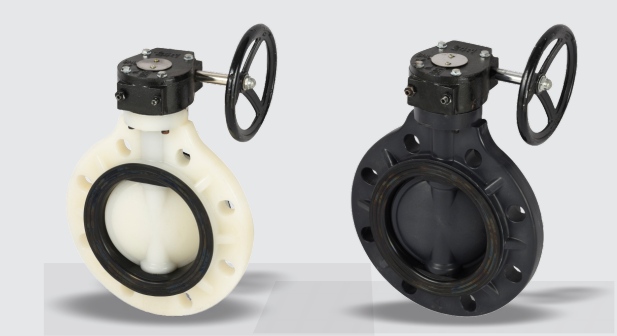
· Valve Fails Leaking or Open: If an isolation valve is supposed to be closed but leaks (perhaps due to seat wear or debris), it can defeat the purpose of having redundant loops. For example, if a standby pump loop is isolated by a valve that leaks, the standby loop might unintentionally circulate or equalize pressure with the active loop. This can reduce the overall pressure available to push coolant through far-end servers, causing subtle cooling issues. Moreover, a leaking valve can lead to energy waste (pumping fluid in unwanted circles) and complicates maintenance – you might assume a section is isolated for service, only to find fluid seeping in. In fire suppression systems (like pre-action sprinkler lines in some data centers), a leaking valve could prematurely fill pipes that are meant to stay dry, reducing the system’s effectiveness and possibly damaging equipment. The risk chain might be: Seal degradation → valve leakage → inability to fully isolate or control → potential safety hazard or maintenance headache. This is why regular valve inspections and timely seal replacements are crucial in preventive maintenance plans.
· Actuator or Control Failure: Data center valves are frequently automated for quick response. An electric actuator valve assembly might fail due to motor issues, loss of power, or control signal errors. If a cooling control valve fails to respond to a closing signal, it might drive coolant temperature too low (overcooling, wasting energy) or too high (if it fails and stays closed, as discussed). If an electric butterfly valve that isolates a branch on high temperature alarm fails to actuate, that branch might continue to receive hot coolant, leading to overheating in that zone. Therefore, many facilities use fail-safe actuators (with battery backup or spring return) for critical valves, so that even an actuator failure doesn’t leave the valve in a dangerous state.
· Fuel Line and Fire Protection Valve Failures: Data centers with diesel generators have fuel supply lines and often incorporate fire-safe valves (e.g., fusible link valves that automatically close if ambient temp gets too high). If such a valve fails to close during a fire scenario, the results could be catastrophic – fuel would continue feeding, exacerbating the fire. This is why these valves are built to stringent standards like API 607 for fire testing and carry FM/UL certifications. A fusible link valve, for example, has a metal link that will melt at ~165°F (74°C) to trigger closure; it’s a passive safety device that simply must work when needed. Regular testing and compliance with safety standards (API, NFPA codes, etc.) are non-negotiable here. The chain we want to avoid is: Overheat/fire → valve fails to close fuel line → fuel feeds fire → major catastrophe. Thus, valves in these critical operations are usually redundant and rigorously tested under simulated conditions.
In summary, valve failures can impact safety, reliability, and business continuity. This is why high-quality valves designed to ANSI/ASME standards for pressure and temperature, and tested to API/ISO criteria for leakage and operation, are recommended. For instance, a pressure relief valve should lift at its set pressure reliably (per ASME BPVC Section VIII or PED requirements) – if it fails, a pressure vessel or pipeline could burst. The stakes are high, but with proper selection and maintenance, the risk of a valve failure causing downtime or danger can be minimized. Data center operators mitigate these risks with design redundancies, continuous monitoring (some valves have position feedback and even leak detection), and adherence to industry standards for valve quality and performance.
Solutions and Strategies for Valve Management
Optimizing Valve Selection
Proper valve selection is the first line of defense against the challenges mentioned above. This process involves choosing the right valve type, size, material, and actuation for each service in the data center:
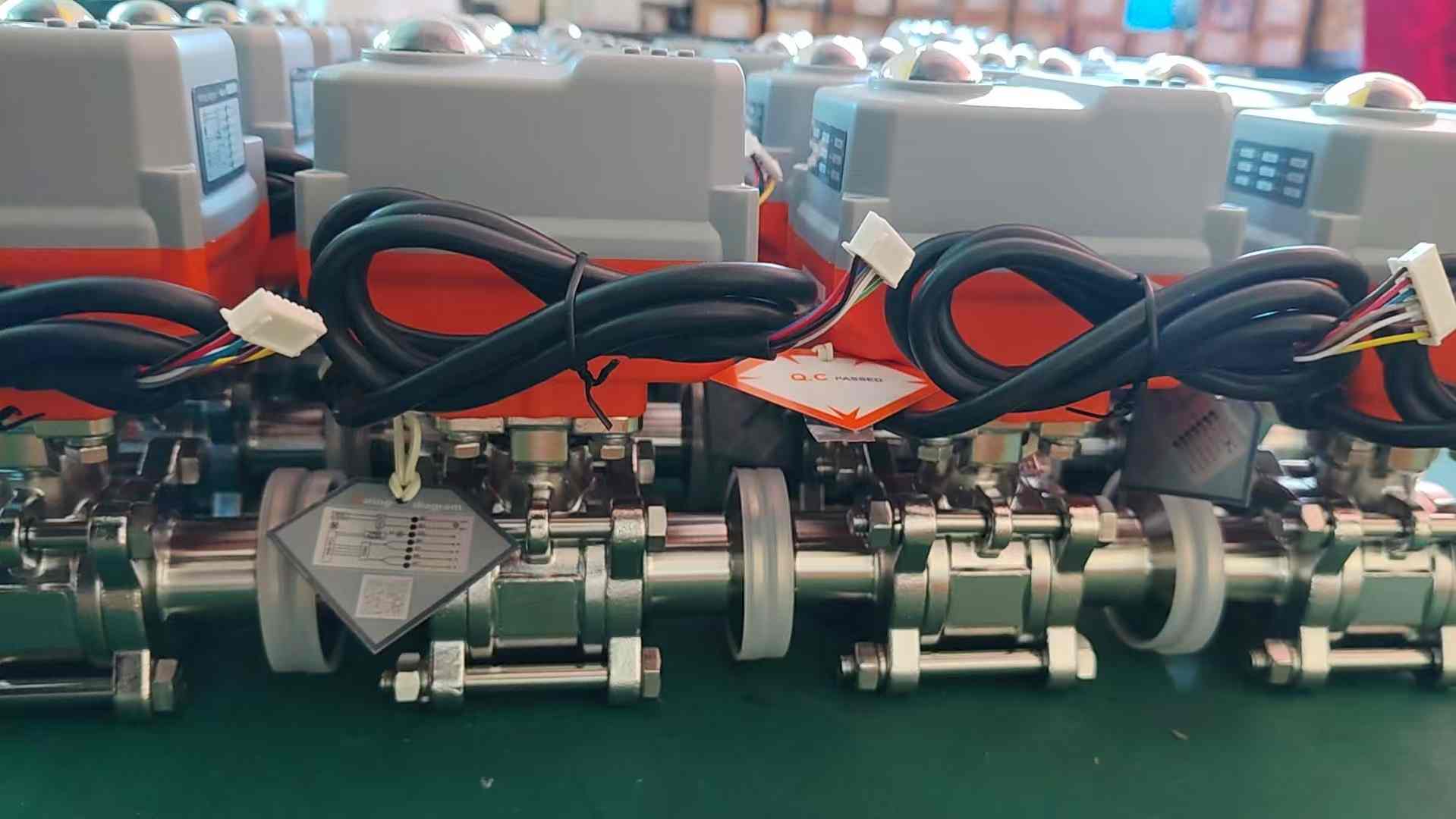
· Match Valve Type to Function: Each application in a data center has an ideal valve type. For modulating control of coolant flow to maintain temperatures, a purpose-built control valve (such as a globe valve or characterized control ball valve) is often the best choice. These valves offer fine flow control and stability. In fact, balanced globe valves are known for maintaining stable flow even when differential pressures fluctuate. On the other hand, for simple open/close on large lines, a high performance butterfly valve (with an appropriate actuator) may be optimal due to its compact size and fast operation. Knowing these strengths, engineers often select a control valve for throttling duties and use butterfly or ball valves for isolation and bypass duties. Check valves are selected for any point where reverse flow must be prevented (e.g., at pumps and where loops intersect). If an application involves potential slurry or particulate (perhaps in an onsite water treatment system for the cooling water), a diaphragm valve might even be introduced – diaphragm valves can handle sludgy fluids and offer tight shutoff without crevices that trap debris. In some data center support systems (like water purification or chemical dosing systems for anti-corrosion additives), using a diaphragm valve ensures reliability with corrosive or particulate-laden fluids.
· Sizing for the Operating Range: A valve should be neither too small (causing excessive pressure drop and forcing the valve to be nearly always open) nor too large (causing control issues and being mostly closed). Engineers calculate required Cv (flow coefficient) and consult the valve’s flow characteristic curve. For control valves, it’s key that the intended flow falls in the valve’s controllable range (usually 20%–80% open for linear control). For isolation valves, sizing usually matches the pipe size for full bore flow, unless there’s a specific reason to neck down. By sizing valves correctly, you avoid the scenario of a valve throttling at an extreme position which, as discussed, can cause cavitation or instability. Moreover, correct sizing prevents undue head loss in the system, improving overall energy efficiency.
· Material Selection and Coatings: Data center valves need materials that ensure longevity and compatibility with the media:
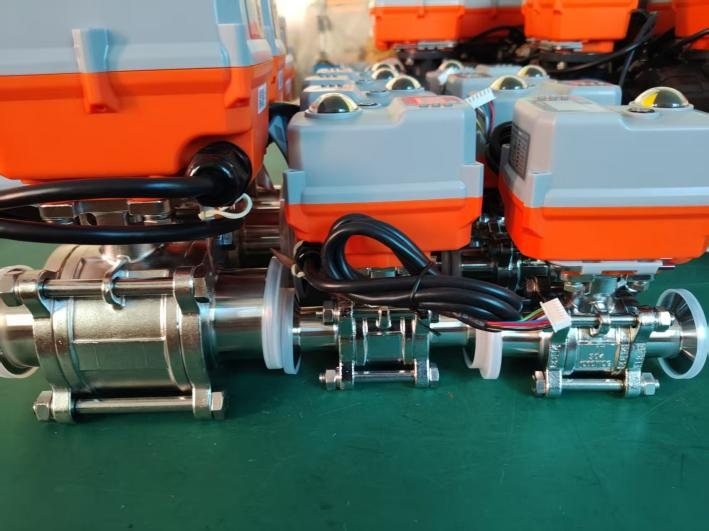
· Metals: Stainless steels (316L in particular) are prevalent for valve bodies, discs, and trims because of their corrosion resistance in chilled water/glycol and even in rooms with high humidity. As noted earlier, 316L stainless steel offers enhanced resistance to corrosion (thanks to its molybdenum content) and is often used in valves and fittings to guarantee a leak-free, corrosion-resistant system. In higher pressure sections or structural parts, alloy steels (e.g., alloy 20 or duplex stainless) might be used for extra strength or chloride stress corrosion cracking resistance. Duplex and Super Duplex stainless steels provide even greater strength and resistance to certain corrosives, which could be relevant if a data center uses cooling water from a source that is brackish or has higher chloride content (though most use closed loops).
· Seals and Seats: Elastomers and plastics inside the valve must suit the fluid. EPDM (a type of rubber) is commonly used for O-rings and gasket seals in water service because it has excellent resistance to water, steam, and glycol, and remains flexible in the typical temperature range of data center cooling (often 5°C to 20°C fluid). FKM (Viton) may be chosen for seals if the fluid is hydrocarbon-based (like a dielectric coolant or fuel) or if higher temperatures are expected, since Viton handles heat and oils well. For valve seats, PTFE is a favorite thanks to its broad chemical resistance and low friction – PTFE seats provide tight shutoff and can handle the occasional temperature swing without deforming. Many high performance butterfly valves use PTFE or reinforced Teflon seals, sometimes with a metal backup, to achieve zero leakage. In fire-safe valves (fuel lines, etc.), you’ll see combinations like a primary PTFE seat with a secondary metal seat that meets fire-safe standards (so the valve still seals after a fire burns away the polymer). The key is to choose seals rated for continuous duty; data center valves often go through tens of thousands of cycles, so the materials must not wear out quickly. Industry sources highlight that sanitary valves for data centers often use FDA-approved elastomers or PTFE for purity and reliability – a nod to the overlap between data center cooling requirements and those of clean industries.
· Coatings: Some valves (particularly if using ductile iron or carbon steel bodies for cost reasons) are coated internally with corrosion-resistant linings. Fusion Bonded Epoxy (FBE) coatings are common on iron valves for water service to prevent rust. Halar (ECTFE) coatings might be used for extreme chemical resistance, though in data centers this is rare unless dealing with a unique fluid. These coatings ensure that even if the base metal isn’t stainless, the fluid only contacts inert surfaces. For example, a butterfly valve with a ductile iron body might have an epoxy-coated interior and a 316 stainless disc – combining structural strength with corrosion protection.

· Compliance with Standards: Ensuring valves meet industry standards is part of optimization. Valves should have pressure ratings consistent with the system’s needs (e.g., ANSI Class 150 or 300 flanged valves as required by ASME B16.5 for flange ratings). They should also be tested per API 598 or ISO 5208 for leak tightness so that you know they won’t leak under pressure. Where safety is concerned, look for API, ANSI/ASME, ISO, DIN certifications or compliance. For instance, valves that carry an API 607 fire-safe certification give peace of mind for fuel applications because they’ve passed fire testing. Chilled water valves might be API 609 (butterfly valves) or ANSI/AWWA C507 (ball valves for water) compliant, indicating suitability for waterworks service. ISO 5211 is an important standard too – it defines the actuator mounting flange dimensions on valves. Selecting valves that conform to ISO 5211 means you can easily mount standard electric actuator valves or replace actuators in the future without custom adapters. In a data center, where actuators might need replacement after years of service, this interchangeability is very beneficial.
· Automation Compatibility: Since data centers heavily leverage automation for monitoring and control, valves should be chosen with the right actuation in mind. In facilities without a compressed air supply, electric actuators are preferable. Modern electric actuators are available in a range of speeds and torques, with features like modulating control, fail-safe (battery backup or capacitor-driven return), and network communication (Modbus, BACnet, etc.). Choosing an electric actuator valve assembly that is fail-safe ensures that if power is lost or an emergency occurs, the valve will move to a pre-determined safe position (open or closed). Additionally, quick-acting actuators might be selected for emergency shut-off valves (to close within a second or two), whereas modulating actuators with fine resolution are selected for control valves. Some data centers also incorporate smart actuators that provide feedback on valve position and even diagnostics on torque required to move the valve (which can indicate a sticking valve or need for maintenance). The selection phase should consider these aspects so that the installed valves integrate seamlessly into the data center’s automation and control architecture.
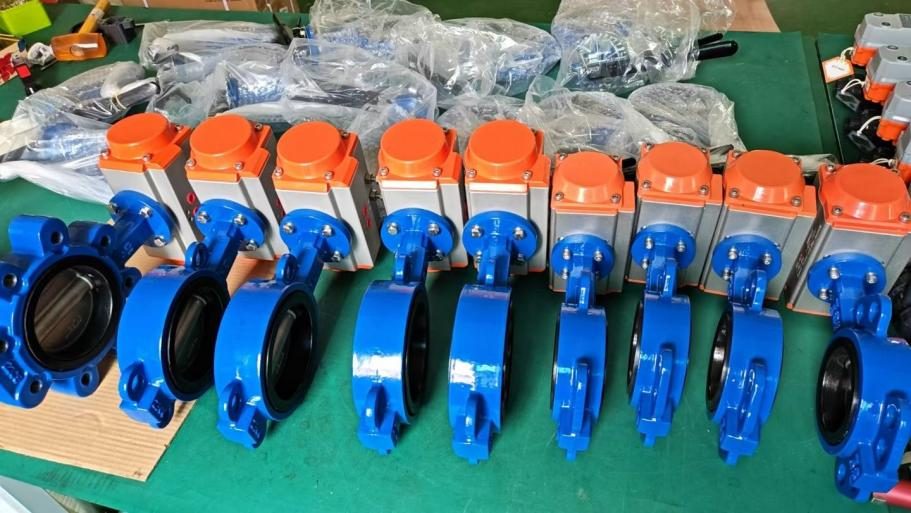
By carefully selecting valves with appropriate types, sizes, materials, standards, and actuation, data center operators can prevent many issues before they arise. In essence, this upfront engineering effort builds a robust foundation—the right valve in the right place ensures smooth operations, energy efficiency, and peace of mind even as the facility scales or operating conditions change.
Regular Inspections and Maintenance
Even the best valves require regular inspections and maintenance to stay in peak condition. In the high-stakes environment of a data center, a proactive maintenance plan is not just recommended—it’s mandatory. Here’s how maintenance strategies are applied to valve management:
· Scheduled Inspection Rounds: Facility engineers should include all critical valves in routine inspection schedules. For cooling system valves, this might mean a weekly visual check of major valve positions (using position indicators or BMS readouts) and a physical walkthrough monthly or quarterly. During inspections, signs of problems include drips or moisture around valve joints (indicating packing or gasket leaks), corrosion or rust spots on valve bodies or actuators, and any unusual sounds when the valve operates (like grinding or water hammer knocks). For example, a slight coolant drip near a valve stem might point to a worn-out stem packing that needs tightening or replacement.
· Preventive Maintenance Tasks: Certain valves have manufacturer-recommended maintenance, such as lubricating stem seals, cycling the valve fully open and closed to prevent seat set-in, or replacing soft parts after a number of cycles or years. Butterfly and ball valves, for instance, may benefit from periodic cycling if they normally sit in one position, just to ensure they don’t seize up. Many data centers schedule annual maintenance windows where non-essential valves are stroked and critical redundant valves are tested. During these windows, they might swap out seal kits – for example, replacing an EPDM seat in a butterfly valve if it shows signs of wear or compression set. Control valves with packing might get a packing adjustment or repacking if slight leakage is detected (following ANSI/ISA maintenance guidelines for control valve packing tightness). Also, any strainers upstream of valves (commonly installed to catch debris that could damage valve seats) should be cleaned regularly to prevent clogging and differential pressure that could affect valve performance.
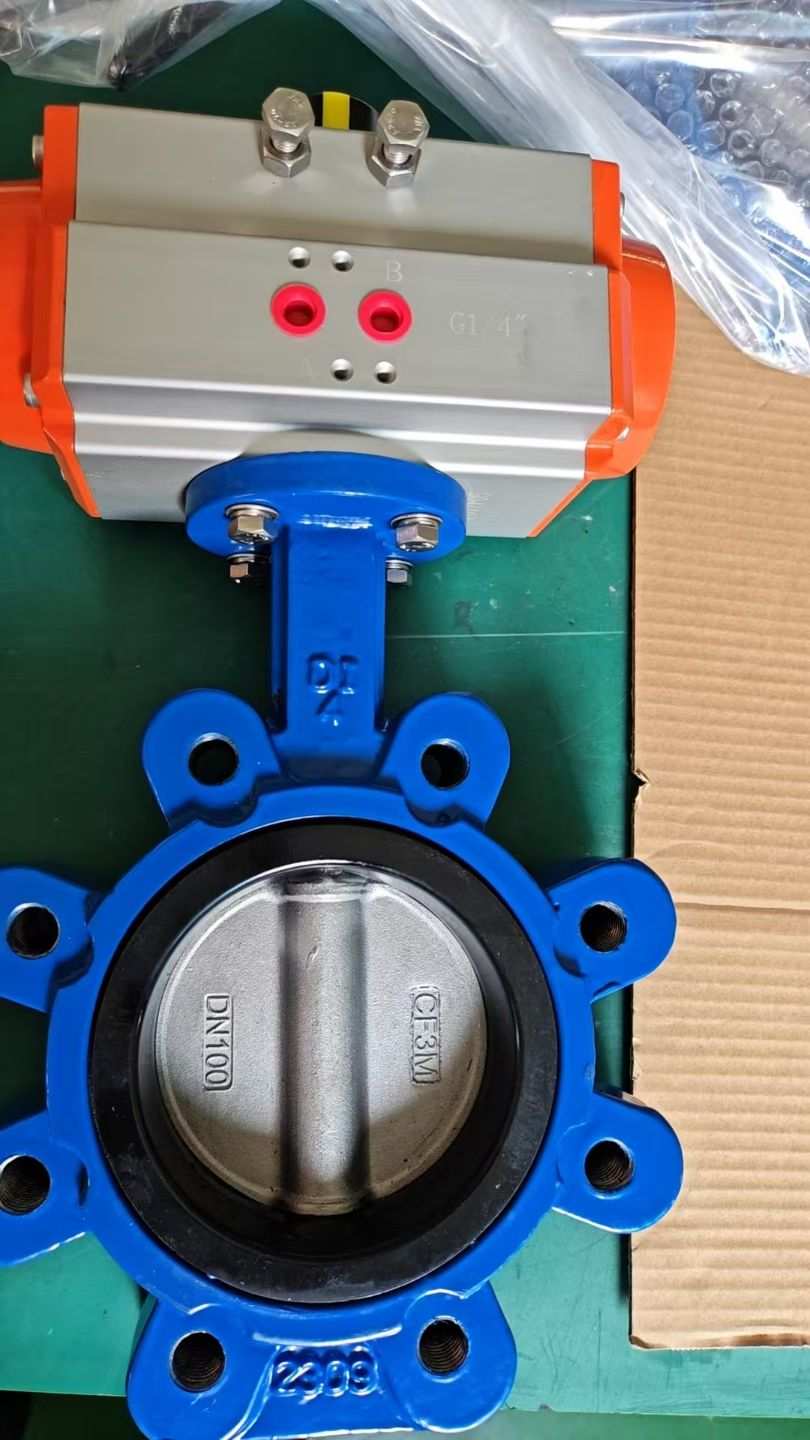
· Calibration and Testing: For modulating valves that rely on positioners or calibration (like an electric control valve that modulates based on a 4-20mA signal), verifying their calibration is critical. Over time, an actuator might drift, so that 50% command doesn’t equal 50% open anymore. Technicians should periodically test that valves respond correctly to control signals and reach the intended positions. This might involve manual overrides or using the BMS to drive a valve through a test stroke. Additionally, pressure relief valves on chilled water systems (if present on expansion tanks or pump discharge safety bypasses) should be tested or re-certified at recommended intervals (often annually or bi-annually) to ensure they pop open at the set pressure. Following ASME and API standard practices for relief valves, one might either test them in place if possible or remove and send to a certified shop for bench testing.
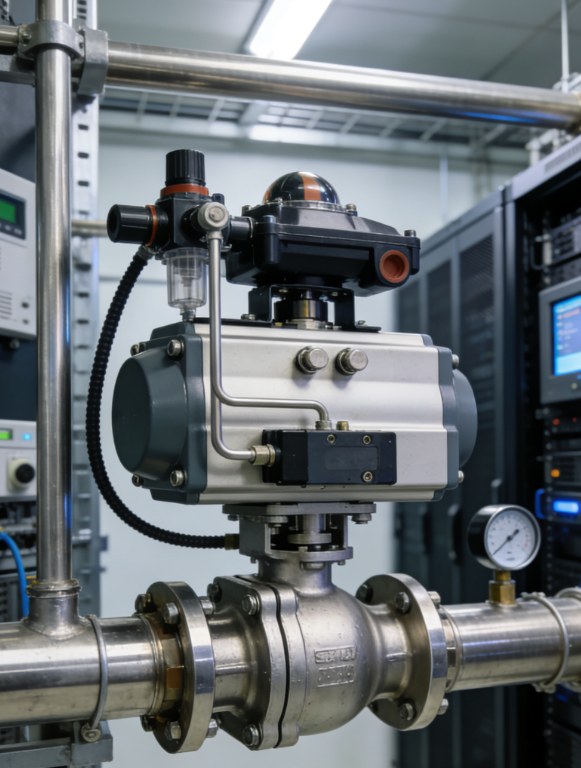
· Actuator Maintenance: Actuators, especially mechanical ones, need love too. Electric actuators should have their indicator lights, limit switches, and any battery backup systems checked. Gearboxes might need periodic greasing. If an actuator is rated for a certain number of cycles, keeping track via the control system can inform replacement before failure. Pneumatic actuators (if any are used, say for fast fail-safe action in fuel lines, if the facility has instrument air) would need checks for air leaks, and their associated solenoid valves and air filters need maintenance (filters drained of condensate, etc.). Given many data centers lean towards electric actuation due to lack of instrument air, the focus is ensuring electrical connections are tight and protected (moisture in actuator conduits can be an issue in chilled water environments, so NEMA 4 or NEMA 4X enclosures and good cable gland sealing are important).
· Cleaning and Environmental Control: The environment around the valves should also be maintained. For example, dust accumulation on actuator cooling fins (for larger electric actuators) can cause overheating. In a data center, dust is usually well-controlled, but mechanical rooms housing chillers and valves might be less pristine. Regular cleaning ensures that actuators and manual handles are accessible and that identification tags remain legible. It’s wise to label valves clearly and keep a log – when was it last exercised, what is its normal position, etc. Good documentation aids maintenance and avoids mistakes like inadvertently closing the wrong valve.
· Leak Response and Repairs: Despite preventive measures, leaks or issues might still occur. A small leak detected from a valve gland (around the stem) can often be fixed by a slight adjustment to the packing nut – a quick maintenance fix. However, a larger leak, say from a flanged connection, might require a shutdown of that line and replacement of a gasket. Data centers usually have redundancy to allow such repairs (e.g., a dual-feed cooling loop where one can be taken down). Maintenance teams should have a stock of critical spare parts: common sizes of valve seals, gaskets, a spare actuator or two for the most critical valves, and even a few spare valves for sizes/types that are single points of failure. This way, if a problem is found, it can be addressed swiftly with minimal impact.
Regular maintenance not only fixes existing issues but also prevents catastrophic failures by catching wear-and-tear early. For instance, if a trend of increasing torque is noticed when operating a valve (many modern actuators can report the torque required to move the valve), this could indicate the valve is starting to stick – a signal to service or replace it before it jams at a bad time. By implementing a rigorous maintenance routine, the facility ensures that valves will function as intended when they’re truly needed, be it day-to-day fine control or an emergency shutdown. As the saying in engineering goes, “Take care of your equipment, and it will take care of you.” In a data center, this couldn’t be more true for valves.
Training Staff on Valve Operations
Even with great equipment and maintenance, the human factor remains pivotal. Training the operations and facilities staff in valve operations and emergency procedures is an essential strategy to overcome challenges with data center valves.
· Understanding Valve Functions and Locations: Every facilities technician should know the critical valves by name, type, and location. For example, they should know which valve isolates the CRAH unit on row 5, or which pair of butterfly valves will swap the active chiller in the system. Many data centers maintain detailed piping and instrumentation diagrams (P&IDs) and valve lists. Regular training sessions or walkthroughs can reinforce this knowledge. During an emergency, you don’t want any confusion about which valve to close. Techniques like color-coded tags (blue tags for chilled water valves, red for fire suppression, etc.) and unique identifiers can help. Staff should practice tracing lines and identifying valves as part of their routine drills.
· Operational Protocols: Staff must be trained in standard operating procedures (SOPs) involving valves. For instance, how to do a controlled valve switchover: if they need to transfer cooling load from one loop to another, which valves are opened first and which are closed later to avoid water hammer? They should know the correct sequence to avoid trapping air or causing surges. Another SOP example: how to respond if a valve fails. If a critical electric actuator valve doesn’t respond via the control system, staff should know how to engage its manual override. Most electric actuators have a handwheel or wrench for manual operation when power or controls fail. Training should cover locating this and safely using it (often there’s a clutch or a specific procedure to avoid damaging the gear mechanism). Practicing these manual operations under non-emergency conditions gives staff the confidence and muscle memory to do it under pressure.
· Emergency Drills: Just like IT has disaster recovery drills, facility teams conduct emergency drills. One such drill might simulate a major leak in a cooling loop: which valves do you shut to isolate the leak, and how do you divert flow to backup systems? By drilling these scenarios, operators learn to act quickly and correctly. Similarly, a drill for a fire scenario in the generator room could involve verifying that the fusible link fuel valves have closed, and if not, manually closing the fuel supply via a backup valve. Training should emphasize safety – e.g., if a valve is in a dangerous location (like high on a pipe or in a cramped space), use proper PPE and tools (a valve wrench or extended handle) to operate it. Data centers also often operate under permit-to-work systems; training includes understanding when it’s safe to operate a valve and communicating status to the broader team to avoid someone else unexpectedly re-opening something under maintenance.
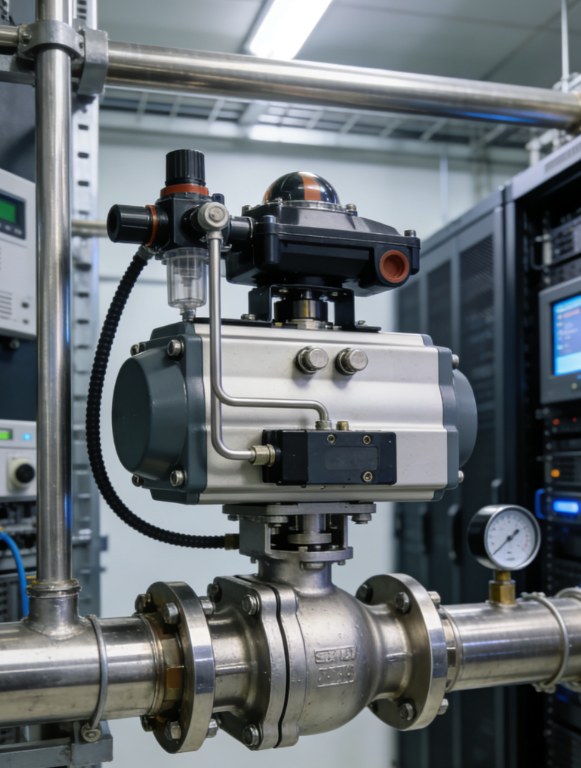
· Valve Maintenance Training: The maintenance crew should be specifically trained on valve maintenance best practices. This might involve formal training sessions from the valve manufacturers or experienced engineers. Topics include how to properly tighten packing, how to replace a valve actuator, how to calibrate a control valve positioner, and how to verify a valve’s performance after maintenance. If the data center uses specialized valves like diaphragm valves in water treatment, technicians should learn the specific way to change a diaphragm and recalibrate the closure if needed. Hands-on workshops can demystify these tasks so that staff can perform them confidently. Notably, improperly maintained valves can be as bad as faulty ones – for example, over-tightening a packing gland can make the valve stem seize, or misadjusting a limit switch in an electric actuator can cause the motor to stall. Training helps avoid these pitfalls.
· Vendor and Standards Familiarity: Staff should also be aware of the standards and vendor recommendations that apply to their valves. For example, knowing that a valve is API 607 fire-safe certified tells them it should have certain design features (like graphite seals) – so if they ever replace parts, they must use the correct ones to maintain that certification. Training might involve reviewing key standards (ANSI, ASME, API, ISO) that were used in selection so that the team appreciates why those valves were chosen and how to ensure they remain compliant. Vendors often provide manuals – training can ensure everyone knows where those manuals are and how to interpret them. Some data centers even create quick reference guides (cheat sheets) for their staff, summarizing how to troubleshoot common valve-actuator issues or the specifications of critical valves.
· Cross-Training and Drills with IT Staff: Interestingly, educating some IT operations staff about the basics of the cooling system (including valves) can be useful. While they won’t operate the valves, understanding that “if X valve fails, it could affect Y servers” helps in collaborative problem management. Conversely, facility staff should understand the stakes: if a certain valve is closed for maintenance, which servers or services are at risk of reduced cooling? This holistic understanding comes from interdisciplinary drills and communication. The overarching goal is a team that is alert, knowledgeable, and ready to respond to any valve-related issue swiftly and safely.
In conclusion, a well-trained staff can often catch and correct valve issues before they escalate. They become the human sensors and responders in the system, complementing the high-tech monitoring. With clear procedures and regular practice, the team ensures that no matter what valve problem arises – be it a slight leak or a major failure – the response will be immediate and effective, thereby safeguarding the data center’s continuous operation.
Conclusion: Ensuring Reliability in Data Center Valve Applications
Valves may be simple mechanical devices, but in a data center they stand as gatekeepers of thermal management and safety. Throughout this discussion, we’ve seen how common challenges – from pressure fluctuations and flow control issues to material degradation and actuator failures – can threaten the stability of a data center’s operations. By understanding these challenges, engineers can implement robust solutions: selecting the right valve types (ball, butterfly, check, globe, etc.) for each job, choosing durable materials like 316L stainless steel with PTFE/EPDM seals to handle the cooling media, and adhering to industry standards (ANSI, ASME, API, ISO, DIN) that ensure each valve is up to the task.
Crucially, a proactive approach is needed. Cause-and-effect chains in valve problems teach us that small issues compound over time – a minor oscillation can lead to seat wear, which leads to leakage, which then causes inefficiencies or downtime. Breaking these chains early through preventive maintenance and monitoring is far easier than dealing with a failure after the fact. Regular inspection rounds, timely seal replacements, calibration checks, and keeping spare parts handy are part of this preventative ethos. It’s an investment that pays off by avoiding unplanned outages and emergency firefighting.
Safety considerations must never take a back seat. We highlighted how valves tie into safety systems: pressure relief valves guarding against overpressure, fusible link valves shutting off fuel in a fire, and so on. Ensuring these devices are maintained and tested as per standards (for instance, API 598 leak tests or API 607 fire tests for relevant valves) is literally insurance against disaster. Compliance with standards and certifications is not just bureaucratic box-checking – it directly translates to valves that perform under extreme conditions when you need them most.
Moreover, the human factor in valve reliability cannot be overstated. A knowledgeable and well-prepared operations team can often detect and resolve a valve issue before it impacts the IT equipment. Conversely, a lack of training might turn a minor valve hiccup into a major incident. Thus, continuous training, simulations, and knowledge sharing are integral to the reliability equation.
In the end, ensuring reliability in data center valve applications is about diligence and design working hand-in-hand. The diligent part is ongoing care: monitoring, maintenance, and training. The design part is forward-thinking: building in redundancy (so one valve failure doesn’t halt cooling), using modern solutions like pressure-independent valves to smooth out control issues, and integrating smart actuators that can send alarms at the first hint of a problem. When both aspects are addressed, data center valves cease to be points of vulnerability and instead become robust links in the chain of uptime.
For data center operators and engineers, the mission is clear: apply the lessons of industrial valve management to the digital infrastructure realm. The best practices from the field – industrial-grade valves, regular testing, standard compliance, and skilled personnel – will ensure that even as data centers scale up in power and heat density, their cooling and fluid systems remain steadfast. A well-managed valve is essentially invisible to daily operations; it’s only when valves are mismanaged that they make their presence known, often unpleasantly. By following the strategies outlined here, one can keep these components quietly doing their job in the background, thereby keeping the servers cool, the facility safe, and the digital services online without interruption.
.png?imageMogr2/format/webp)
- 2026-09-30 08:25:23
- 2026-09-28 10:28:43
- 2026-09-21 15:23:44