

Understanding the Role of Ultrapure Water (UPW) Control Valves in PCB Rinsing Processes
- 2026-08-24 10:05:00
- admin
- NO COMMENTS
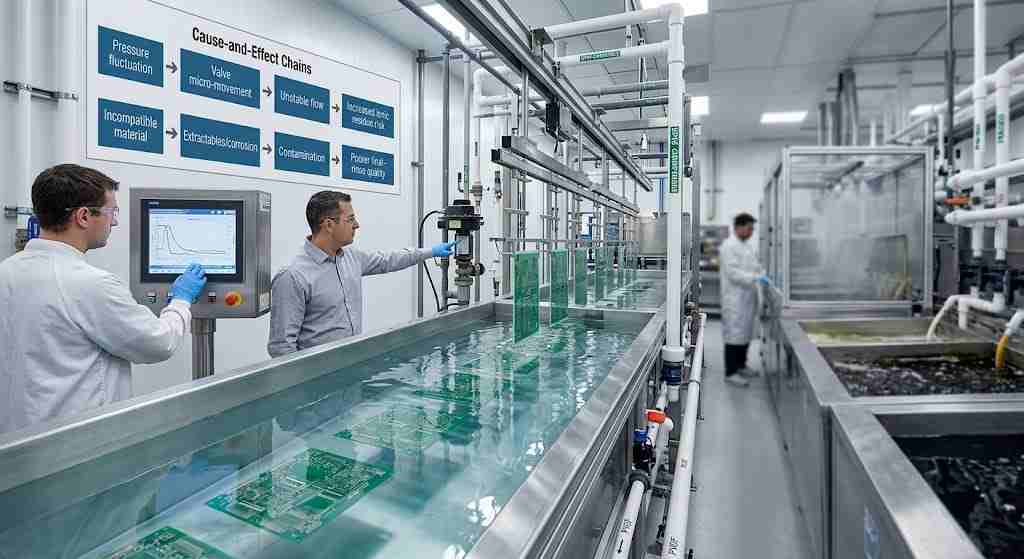
Walk through the wet-processing section of a PCB plant, and the rinse stations often look less demanding than the etching or plating lines beside them. There is no aggressive spray of ferric chloride at the final rinse, no obvious sludge buildup, and the water appears perfectly clear. Yet this is exactly where a small control problem can become expensive. Engineers on site may notice the rinse-water resistivity recovering more slowly after a production change, or a branch flow oscillating at low demand even though the controller output looks stable.
Another warning is more mechanical. A valve that operated quietly during commissioning begins taking slightly longer to stroke, or the actuator starts correcting its position repeatedly around a narrow opening. In ultrapure water service, that behavior matters. Pressure fluctuation → valve-element micro-movement → unstable branch flow → inconsistent rinsing → increased ionic residue risk on the PCB surface. A second chain develops when an unsuitable wetted material is introduced: incompatible material → extractables or corrosion products → contamination of the UPW loop → poorer final-rinse quality.
The UPW control valve, therefore, has a job beyond regulating liters per minute. It must control flow without introducing particles, ions, dead legs, excessive pressure drop, or unnecessary maintenance into a high-purity water system.
Understanding the Role of Ultrapure Water (UPW) Control Valves in PCB Rinsing Processes
Definition of UPW and Its Importance
Ultrapure water is water that has been treated far beyond ordinary potable or process-water quality. In PCB production and related semiconductor manufacturing environments, treatment typically removes suspended solids, dissolved salts, organic contaminants, microorganisms, and trace ionic species to extremely low levels.
From an engineering perspective, the important point is not simply that UPW is “clean.” It is chemically hungry. Water with very low ionic content can readily pick up contaminants from pipes, gaskets, valve seats, lubricants, and poorly selected metallic surfaces. This changes the way industrial valves should be specified.
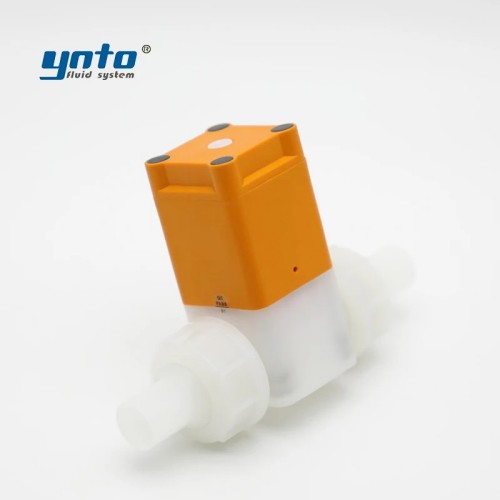
A valve suitable for ordinary utility water may operate perfectly from a pressure standpoint yet still be unsuitable for UPW because its materials, internal geometry, or manufacturing cleanliness introduce contamination into the circuit. For aggressive chemical or high-purity duties, a PVDF diaphragm valve is a practical option because the diaphragm isolates much of the operating mechanism from the fluid, while the PVDF body provides strong chemical compatibility.
Key Objectives of Efficient PCB Rinsing
PCB rinsing has a straightforward objective: remove chemistry left by the previous manufacturing stage without creating a new source of contamination.
That sounds simple until production throughput rises. Boards enter the rinse section carrying residues from cleaning, etching, developing, stripping, plating, or surface-treatment processes. If the rinse flow is too low, contaminants remain on the surface. If it is unnecessarily high, UPW production and wastewater-treatment costs increase.
For engineers working on site, the best operating point is usually not “maximum flow.” It is a stable flow that maintains the required rinse quality under changing product load.
This is where process optimization begins. The valve has to respond accurately at both normal and reduced demand. Poor low-flow controllability can cause hunting. The controller closes the valve slightly, the flow falls too far, conductivity rises, the controller opens it again, and the cycle repeats. Besides wasting water, this oscillation makes the rinsing process less predictable.
Importance of High Purity Water Systems
Characteristics of High Purity Water
High purity water systems depend on the entire distribution loop remaining chemically compatible with the produced water. Clean treatment equipment alone is not enough.
An engineer assessing a UPW loop normally looks at more than the RO skid. Pipe material, pump construction, fittings, valve seats, diaphragm compounds, surface finish, stagnant branches, temperature, circulation velocity, and maintenance procedures all influence final water quality.
Plastic materials such as PVDF and high-purity grades of polypropylene are attractive because they offer good resistance to many chemicals without the corrosion behavior associated with conventional carbon steel. In certain higher-temperature or mechanical-duty sections, 316L stainless steel may still be appropriate when fabrication quality and surface condition are properly controlled.
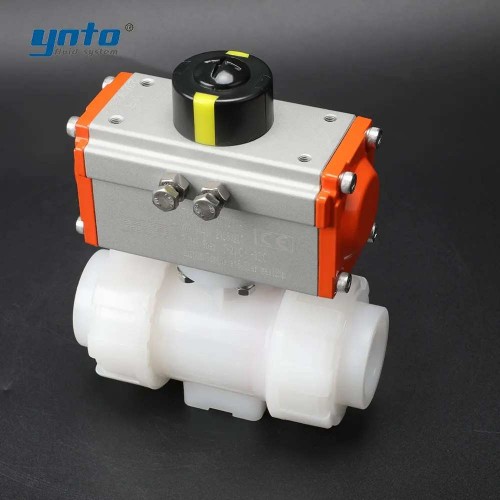
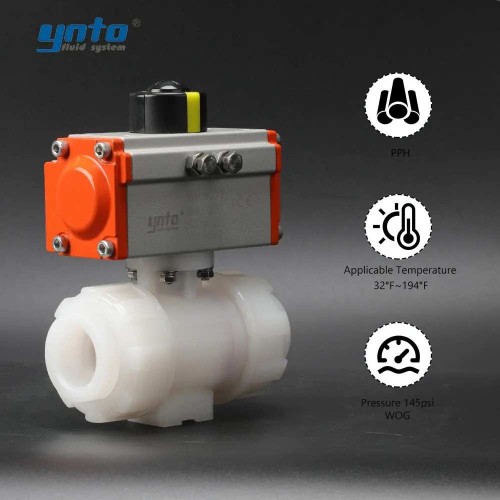
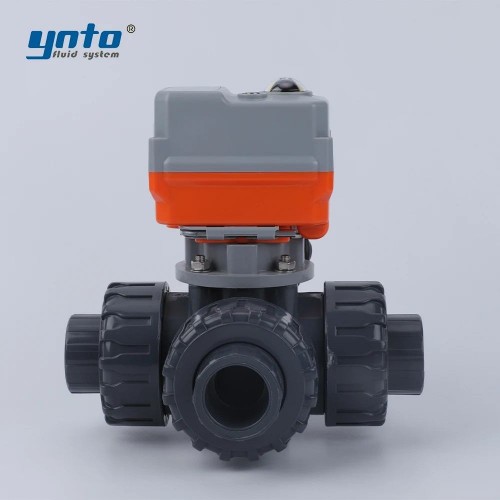
For chemical delivery or rinse-support branches where plastic construction is preferred, a PPH/PVDF pneumatic plastic ball valve provides another option. The main engineering question is whether the selected body and seal materials match the water chemistry, temperature, pressure, purity target, and cleaning method.
Benefits of Using UPW in PCB Rinsing
Using UPW for final PCB rinsing helps reduce the ionic and particulate residues that could otherwise remain after wet processing. This becomes increasingly important as circuit density rises and conductor spacing decreases.
In many field operations, engineers can see the relationship between rinse stability and downstream quality. A spray bar with uneven pressure may leave certain board areas less effectively rinsed. A valve opening too abruptly can produce pressure spikes that disturb nozzles or change spray patterns.
The cause-and-effect relationship becomes:
Pump or valve pressure fluctuation → uneven rinse distribution → inconsistent contaminant removal → increased risk of residues reaching drying or later finishing stages.
Better control does not necessarily require a more complicated system. It requires a correctly sized valve, sufficient valve authority, a suitable actuator, and a feedback signal that represents what is actually happening in the line.
Understanding Control Valves
Functions of Control Valves in Water Management
A UPW control valve may regulate branch flow, maintain pressure, divert water between production and recirculation, isolate equipment during maintenance, or control water delivery to the rinse station according to product demand.
At commissioning, engineers often focus first on Cv or Kv. That is necessary, but incomplete. The valve also has to perform over the expected operating range. If a valve spends most of its life at 5–15% opening, sizing should be reconsidered. An oversized valve can behave almost like an on/off device even when connected to a modulating actuator.
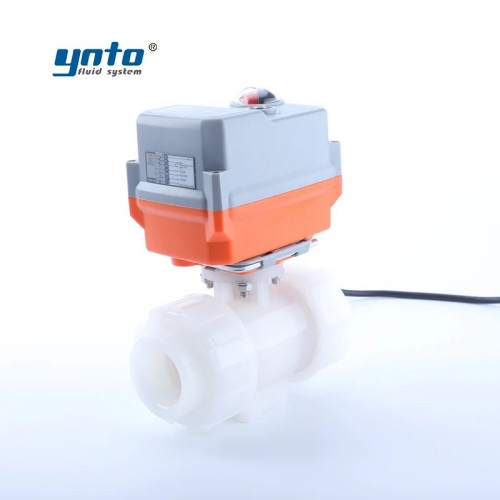
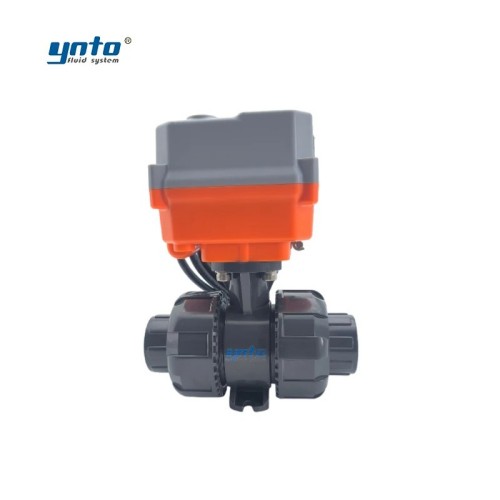
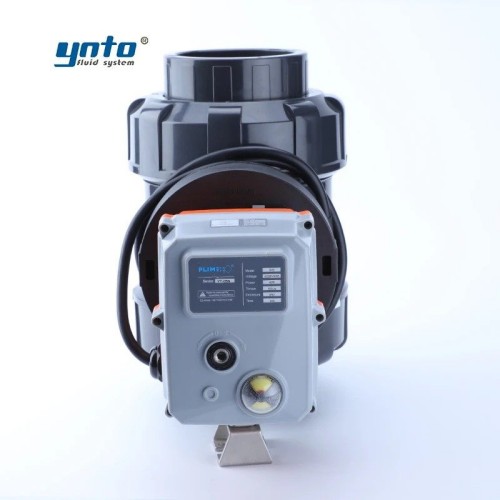
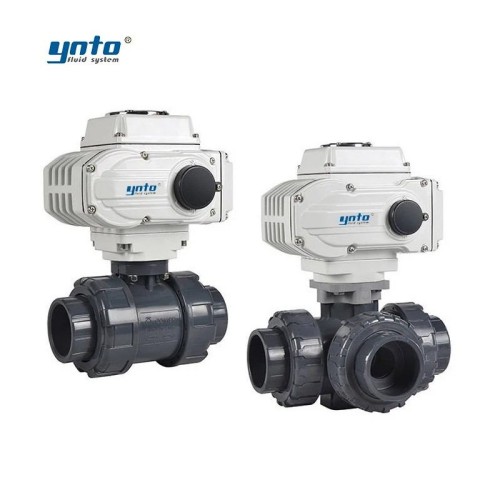
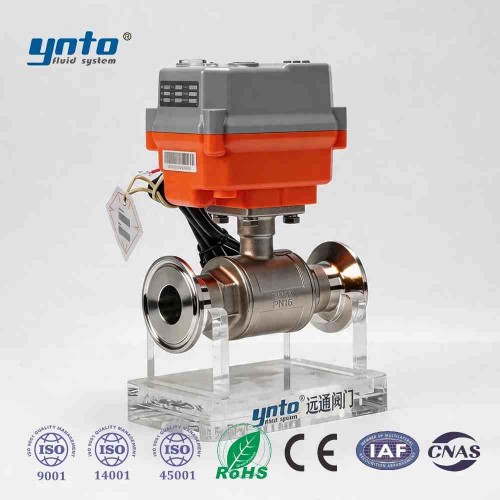
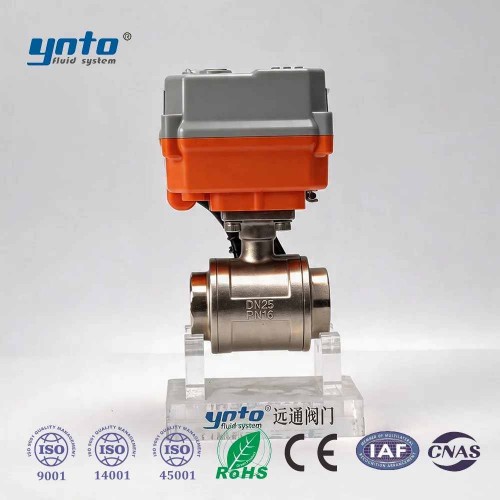
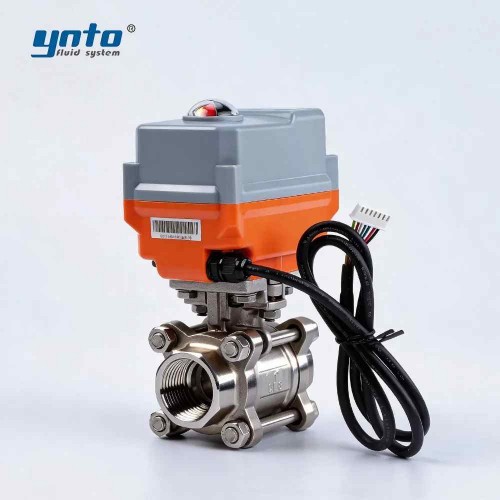
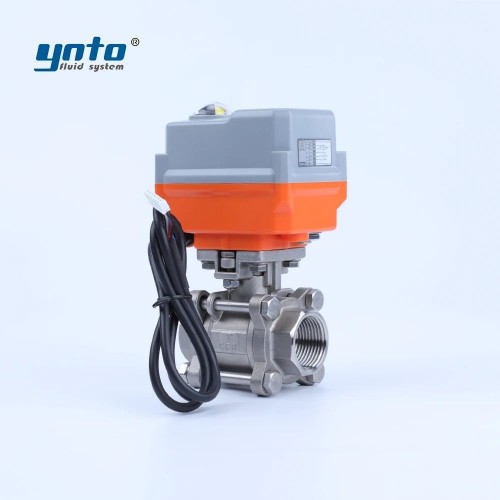
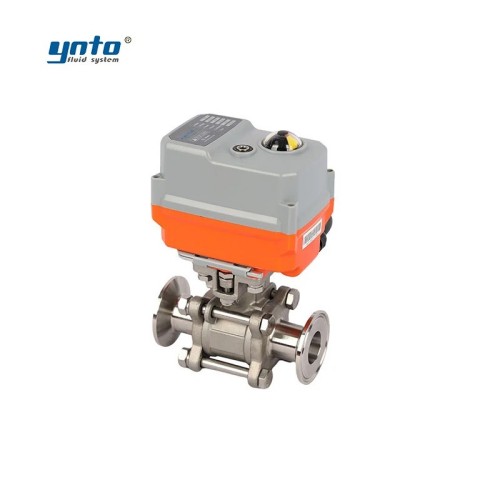
For applications where automated shut-off is required and pressure loss must remain low, the broader CNYNTO electric ball valve range allows buyers to evaluate different materials, connections, actuation options, and control configurations for water and process-fluid systems.
Seat and seal selection deserves similar attention. PTFE has broad chemical compatibility and low friction, which makes it useful in many high-purity and chemical duties. EPDM is widely used in water applications but must be verified against temperature, cleaning chemicals, and purity requirements. FKM provides different chemical and temperature characteristics and should be selected only where those properties match the service.
Types of Valves Suitable for UPW Applications
Diaphragm valves are particularly attractive in high-purity water systems because the process fluid can be isolated from stem packing and many moving components. Their internal geometry can also be designed to reduce stagnation.
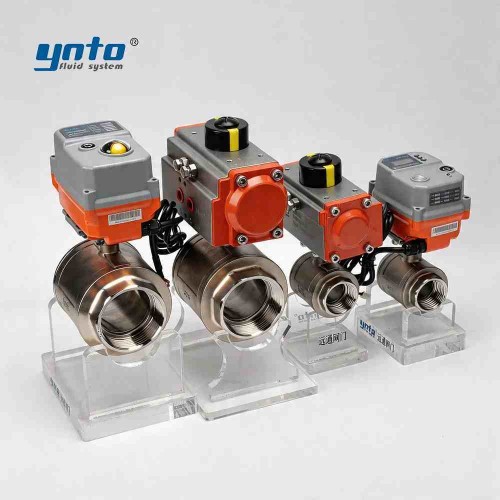
Ball valves are useful where low pressure drop and fast shut-off are more important than fine throttling. In rinse supply headers and larger distribution lines, they can provide reliable isolation with a nearly unrestricted flow path.
Control valves are needed when the application requires repeatable modulation rather than simple open-close service. The design should minimize dead volume while providing sufficient rangeability.
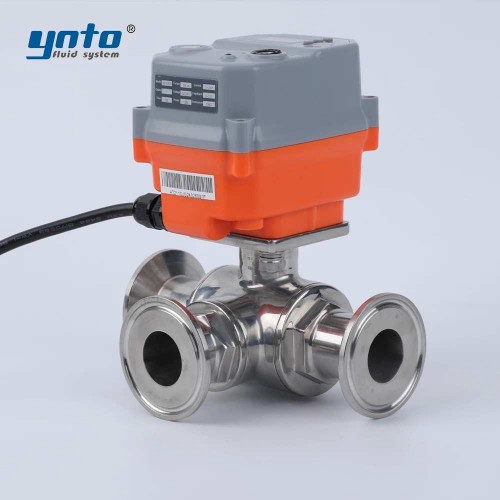
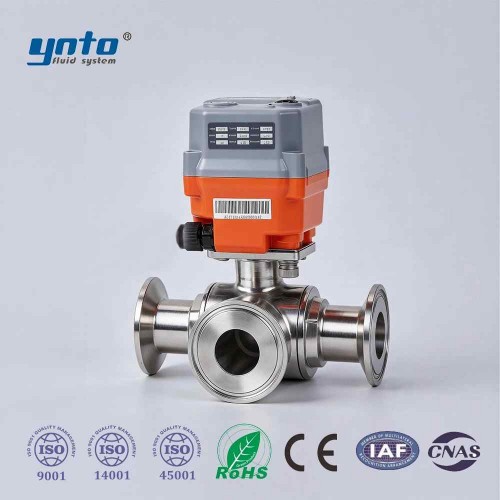
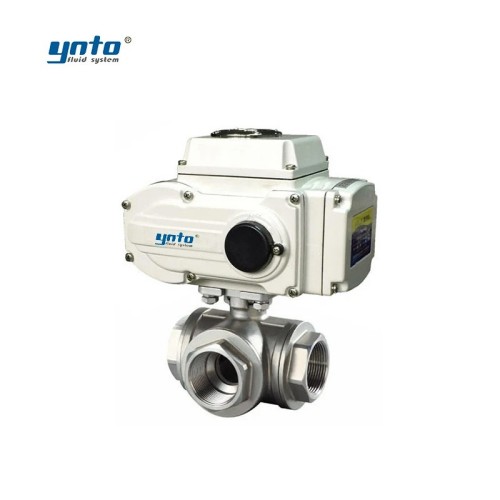
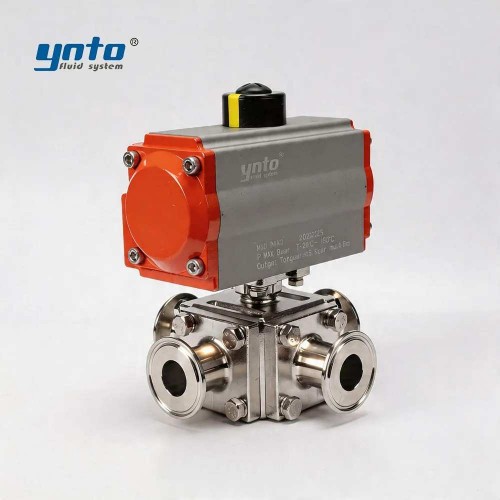
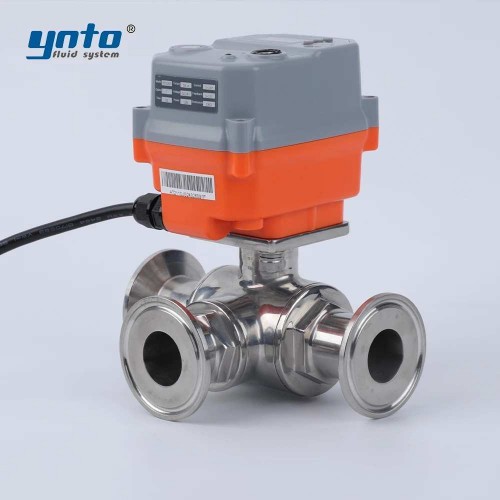
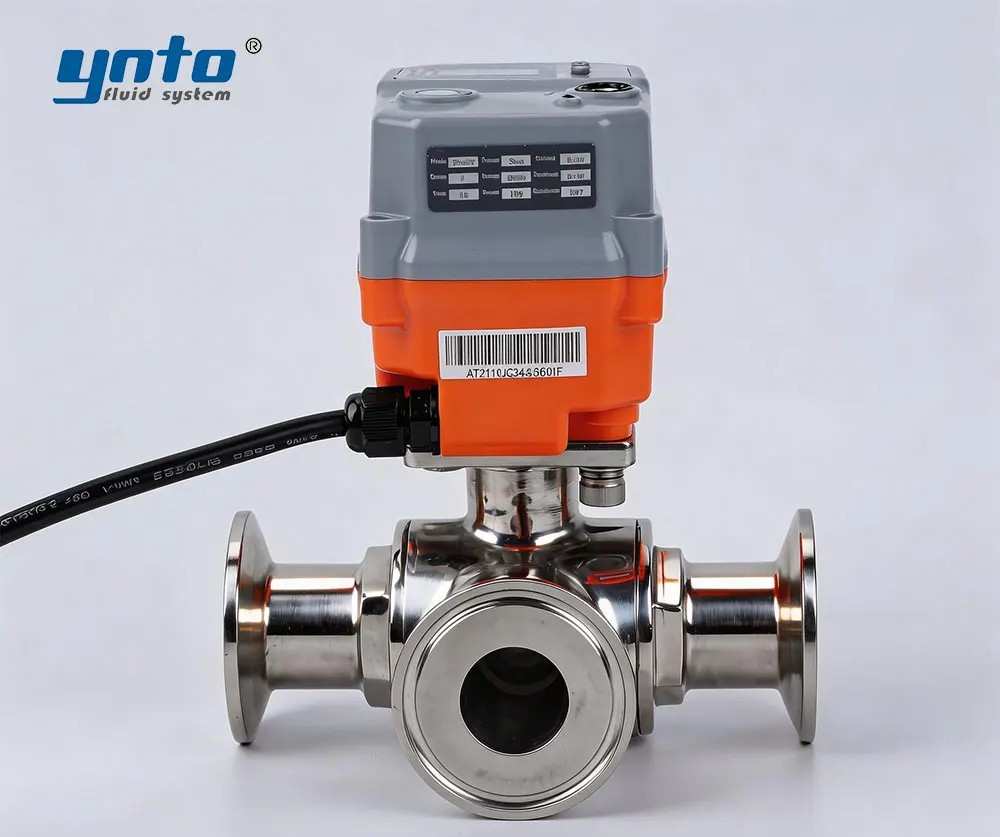
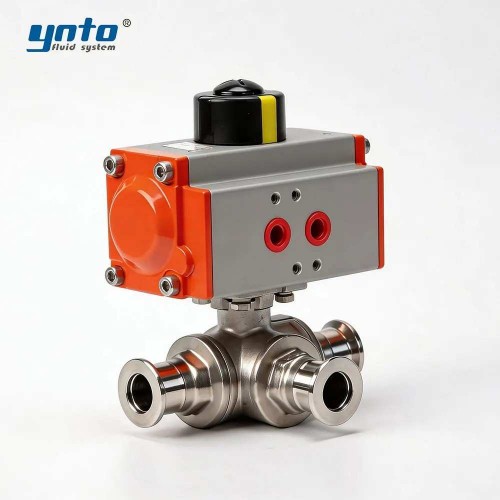
Three-way arrangements are also useful when water must be redirected between the rinse process and a recirculation path. A sanitary-type electric 316 stainless steel three-way clamp ball valve can provide automated flow diversion where the project permits metallic wetted construction and requires a compact, removable connection.
The decision should not start with the valve catalogue. It should start with the water-quality target, pressure, temperature, flow range, allowable contamination, cleaning regime, and required automation.
Reverse Osmosis Systems in UPW Production
Overview of Reverse Osmosis Technology
Reverse osmosis systems form one of the central purification stages in many high-purity water plants. Pressure forces feedwater across a semi-permeable membrane, allowing water to pass while rejecting a large portion of dissolved ionic contaminants.
UPW production normally requires more than RO alone. Pretreatment, membrane filtration, polishing, deionization, ultraviolet treatment, degassing, and final filtration may be added according to the required purity.
From a valve-engineering point of view, RO systems create several distinct operating duties. Feedwater may contain treatment chemicals. Concentrate lines experience higher dissolved-solids levels. Product water becomes progressively cleaner and therefore more sensitive to contamination from downstream materials.
The same valve specification should not automatically be copied across every section.
Importance of RO Systems for PCB Cleaning Process
Stable RO operation supports the quality of the UPW supplied to PCB rinsing. If upstream water quality or membrane performance changes, the downstream polishing system must work harder.
Control valves contribute by maintaining stable feed pressure, concentrate flow, product-water routing, and tank level. Rapid valve movement can destabilize membrane differential pressure, while poorly selected throttling elements can introduce unnecessary energy loss.
Where fine regulation is necessary in utility or treatment sections, CNYNTO’s control valve solutions provide a basis for selecting automated regulating valves according to pressure, temperature, signal type, and process duty.
Process engineers should pay particular attention to valve behavior during startup and shutdown. Sudden pressure changes can stress membranes, piping, and fittings. A smooth sequence reduces hydraulic shock and gives the instrumentation time to confirm water quality before product water is sent to the rinse loop.
Process Optimization Techniques
Key Process Parameters for Rinsing
PCB rinsing efficiency depends on several interacting parameters: UPW flow rate, water purity, spray pressure, rinsing time, product loading, temperature, nozzle condition, and the contaminant load entering from the previous bath.
Engineers often notice that water consumption rises gradually after commissioning. Operators compensate for declining rinse performance by opening manual valves further. The immediate quality issue disappears, but UPW demand and wastewater generation increase.
That approach treats the symptom.
A better investigation measures flow and pressure at each branch, verifies spray distribution, checks conductivity or resistivity trends, and confirms valve position. Fouled nozzles, unstable pumps, or incorrectly sized control valves can all create the appearance that more rinse water is necessary.
In a well-balanced system, the valve should operate in a useful control range rather than continuously near its mechanical limit.
Role of Control Valves in Ensuring Efficiency
Valve response directly affects water use.
Consider a rinse station that requires lower flow during gaps between PCB panels. If the valve responds slowly, full flow continues unnecessarily. If the valve overshoots when production restarts, the system briefly consumes more UPW than required. These small losses become substantial across multiple rinse stages and continuous production.
Automation can link valve position to line speed, product detection, tank conductivity, or rinse recipe. This turns the valve from a passive component into part of the process optimization strategy.
For buyers selecting industrial valves, actuator repeatability should therefore be considered alongside body material. A valve with excellent chemical compatibility but inconsistent positioning can still make process control difficult.
Safety remains part of the specification. UPW itself presents relatively limited chemical hazards, but surrounding PCB processes may use acids, alkalis, oxidizers, and cleaning chemicals. Cross-connection or leakage between those systems can create serious chemical exposure. Isolation valves must therefore provide dependable shut-off, and maintenance personnel should confirm depressurization before opening any line.
Environmental Compliance Standards
Overview of Compliance Requirements
PCB plants operate under environmental requirements covering water use, chemical handling, wastewater discharge, worker safety, and process emissions. The exact legal requirements vary by jurisdiction, so a valve cannot be declared "environmentally compliant" by itself.
Its design can, however, support environmental compliance.
Stable control reduces excessive UPW consumption. Reliable isolation limits chemical releases during maintenance. Correct materials reduce premature corrosion and leakage. Accurate flow control also makes downstream wastewater loads more predictable.
Valve design and testing may reference ANSI/ASME requirements for pressure boundaries and connections. API valve testing practices can be relevant where specified by the project, although API standards are more commonly associated with petroleum and heavy industrial applications than semiconductor UPW service. ISO requirements influence valve testing, actuator interfaces, quality systems, and dimensions, while DIN standards are frequently encountered in European piping and equipment specifications.
For high-purity duty, project-specific cleanliness and material requirements are often just as important as pressure standards.
Impact of Control Valves on Environmental Goals
UPW is expensive water.
Raw water must first be treated, filtered, pressurized, purified, circulated, and continuously monitored. Water rejected during treatment must be managed, and used rinse water eventually becomes part of the wastewater system. Wasting one unit of UPW, therefore, creates more than one unit of environmental impact.
The efficiency chain works in the opposite direction:
Accurate flow control → lower unnecessary rinse-water consumption → reduced UPW production demand → lower wastewater volume and treatment load.
This is why a correctly sized control valve can contribute to both production consistency and environmental goals.
Chemical compatibility also affects sustainability. A valve that fails after one year because its body or seal was incompatible with the process creates material waste, maintenance work, production downtime, and contamination risk. A properly selected PVDF, 316L, PTFE, EPDM, or FKM construction may cost more initially but deliver a lower lifecycle cost where the service justifies it.
Conclusion
Recap of UPW Control Valves in PCB Rinsing
UPW control valves occupy a small physical space in the PCB rinsing line, but they influence water quality, process stability, water consumption, maintenance, and downstream wastewater generation.
A suitable valve needs more than the correct DN size. Engineers should evaluate chemical compatibility, internal geometry, purity requirements, pressure drop, control range, seal materials, actuator performance, and cleaning procedures together.
Diaphragm valves are strong candidates for high-purity and chemically sensitive lines. Ball valves provide low pressure loss and dependable isolation. Modulating control valves are appropriate where rinse demand changes continuously, while three-way valves can maintain recirculation or divert water between operating modes.
The best selection is the valve that performs its hydraulic function without becoming a contamination source.
Future Directions for PCB Rinsing Technologies
PCB production is moving toward tighter process control, more automated water management, and better tracking of resource consumption. Valve technology will follow the same direction.
Position feedback, digital communication, predictive maintenance, and tighter integration with conductivity, pressure, and flow instrumentation will make rinse-water control more responsive. Instead of running every rinse stage at a conservative fixed flow, plants can increasingly adjust consumption according to actual production demand.
For procurement teams, this creates a clear specification strategy: select industrial valves from the operating data first, verify compatibility with high-purity water systems and surrounding chemicals, then select the actuator and control architecture.
The result is not simply a cleaner PCB. It is a more stable rinsing process, more efficient use of UPW, and a system that is easier to operate and maintain over the long term.
.png?imageMogr2/format/webp)
- 2026-09-30 08:25:23
- 2026-09-28 10:28:43
- 2026-09-21 15:23:44